
How to Automate Content Creation

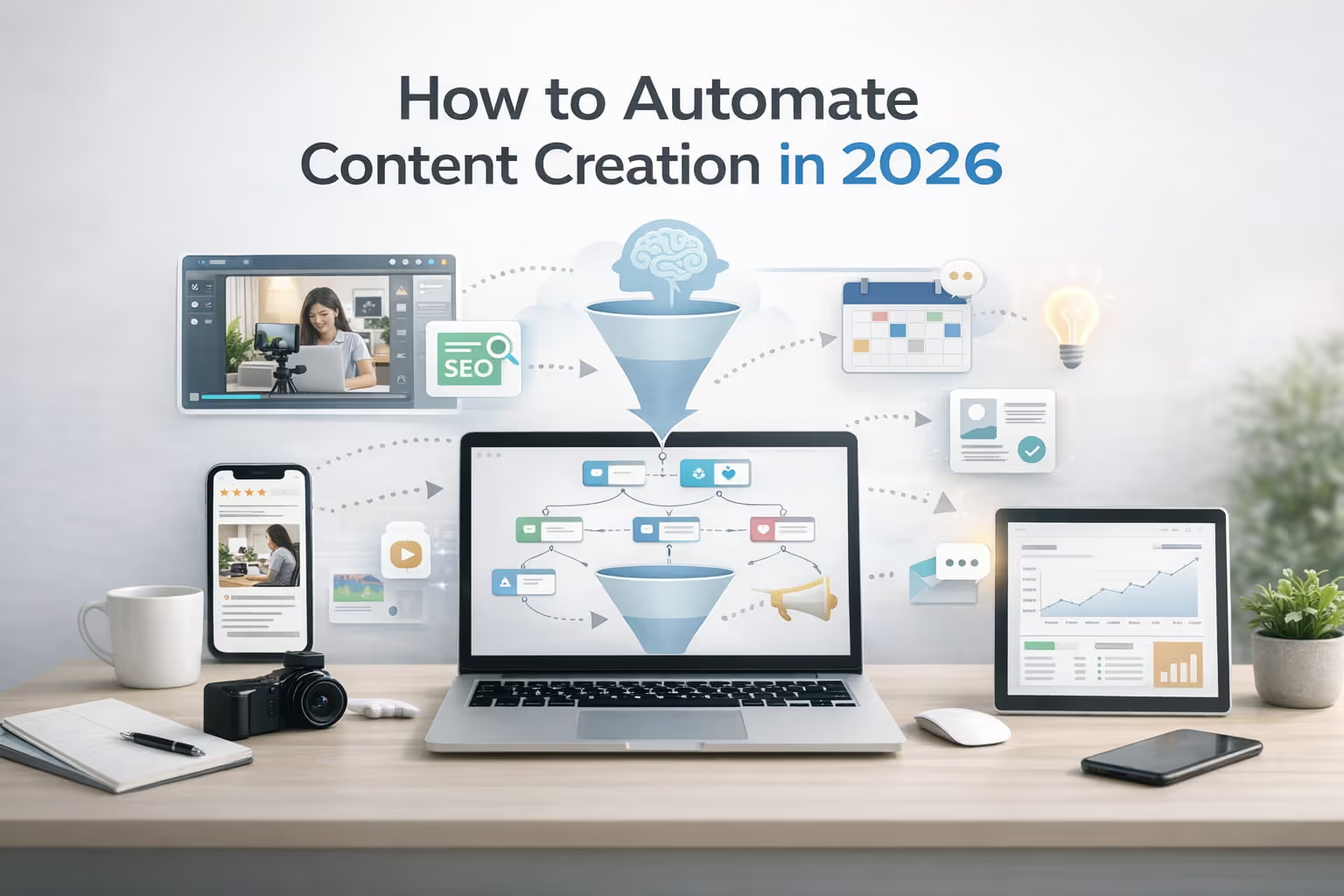
How to Automate Content Creation in 2026
The content landscape has fundamentally shifted. What once required teams of writers, editors, and designers working for weeks can now be accomplished in hours through intelligent automation systems.
Yet despite these capabilities, many organizations still struggle to implement content automation effectively, caught between the promise of efficiency and fears about quality compromise.
This guide cuts through the noise to show you exactly how modern content teams leverage automation to scale their operations without sacrificing the human touch that makes content resonate.
Whether you're a solo creator drowning in content demands or an enterprise team coordinating across global markets, you'll discover practical frameworks for building sustainable content systems that amplify human creativity rather than replace it.
What Is Content Automation?
Content automation in 2026 represents a sophisticated orchestration of AI-powered tools, workflow systems, and human oversight that transforms how organizations produce, optimize, and distribute content.
Unlike the simple scheduling tools of the past, today's content automation encompasses the entire content lifecycle—from initial ideation through performance analysis and iterative improvement.
Definition and Scope of Automated Content Creation
Modern content automation extends far beyond basic text generation. It includes automated research and topic discovery, dynamic content personalization based on user behavior, intelligent content repurposing across formats and channels, automated quality assurance and fact-checking processes, and predictive performance optimization before publication.
These systems don't just create content; they understand context, maintain consistency, and continuously learn from performance data to improve future outputs.
What content automation doesn't include is equally important to understand. It's not a replacement for strategic thinking or creative vision. It cannot substitute for genuine human expertise in specialized fields.
It won't automatically understand your unique brand voice without proper configuration. And it certainly isn't a magic button that produces viral content without human insight and refinement.
AI-Assisted Automation vs Traditional Rule-Based Automation
The distinction between AI-assisted and rule-based automation has become crucial for content teams evaluating their options. Traditional rule-based automation follows predetermined workflows—if this condition is met, then perform that action.
While reliable and predictable, these systems lack the flexibility to handle nuanced content decisions or adapt to unexpected scenarios.
AI-assisted automation, powered by large language models and machine learning algorithms, brings contextual understanding to content processes.
These systems can interpret intent rather than just follow instructions, generate original content based on patterns in your existing material, adapt tone and style for different audiences automatically, and identify optimization opportunities that rigid rules would miss.
The most effective content operations in 2026 combine both approaches, using rule-based automation for consistent, repeatable tasks while deploying AI for creative and analytical challenges.
Why You Should Automate Your Content Process
The question is no longer whether to automate content creation, but how quickly you can implement it without falling behind. Organizations that resist automation find themselves unable to compete with those producing ten times the content at higher quality levels.
The economics are simple: manual content creation doesn't scale linearly, while automated systems do.
Key Benefits of Automating Content Creation
The immediate benefits of content automation extend across every metric that matters to modern content teams. Production costs drop by 60-80% once initial systems are configured, while time-to-market for new content decreases from weeks to hours.
Quality consistency improves dramatically when every piece follows optimized templates and guidelines, and teams can finally achieve true 24/7 content operations without burnout.
Perhaps most importantly, automation liberates human creativity. Writers focus on strategy and storytelling instead of repetitive formatting. Designers conceptualize campaigns rather than resize graphics.
Editors ensure brand voice rather than fix grammar. This shift from production to innovation creates compound value that manual processes can never match.
How Automation Improves Efficiency, Speed, and Scale
Efficiency gains from automation aren't just about doing things faster—they're about eliminating entire categories of work. Consider the typical blog post workflow: topic research might take 2-3 hours manually but happens instantly with AI-powered trend analysis.
First drafts that required half a day now generate in minutes, leaving more time for strategic refinement. SEO optimization that once required specialized expertise becomes automatic, with AI systems understanding search intent better than most human analysts.
Speed improvements compound across the content pipeline. While a human writer produces one article, automated systems can generate dozens of variations for different segments, create supporting social media content, produce email newsletter summaries, and develop video script adaptations.
This isn't about replacing human writers but amplifying their impact exponentially.
The Role of Automation in Multi-Channel Content Strategies
Modern audiences expect consistent experiences across every touchpoint, from TikTok to LinkedIn to email newsletters. Manual coordination across channels inevitably creates gaps and inconsistencies. Automation ensures that core messages adapt appropriately to each platform while maintaining brand coherence.
Smart automation systems understand that a technical white paper needs different treatment than an Instagram story, even when conveying the same information. They automatically adjust tone, format, length, and emphasis while preserving key messages.
This orchestration happens in real-time, allowing brands to respond to trends and conversations as they emerge rather than days later.
Challenges With Content Automation
Despite its transformative potential, content automation presents real challenges that require thoughtful solutions. Ignoring these risks leads to generic, ineffective content that damages brand reputation. Successful implementation means acknowledging limitations while building systems to address them.
Maintaining Content Quality and Originality
The most persistent concern about automated content is quality degradation and homogenization. When every company uses similar AI models, content can converge toward a bland middle ground that fails to differentiate brands.
This "AI sameness" manifests as repetitive phrasing, predictable structures, and lack of unique perspective.
Combating this requires deliberate strategies for differentiation. Leading organizations train custom models on their proprietary content, establishing unique voice patterns from the start.
They inject original research, data, and insights that generic models cannot access. They use automation for foundation work while reserving creative flourishes for human contributors. Quality isn't sacrificed; it's redirected toward elements that truly matter for audience engagement.
Brand Voice and Tone Consistency Risks
Every brand speaks with a distinct voice developed over years of careful cultivation. Automation systems, without proper configuration, can dilute or distort this voice in subtle but damaging ways. A luxury brand might suddenly sound casual, or a playful startup might become unnecessarily formal.
The solution lies in comprehensive voice modeling and continuous refinement. Modern AI systems can learn from extensive examples of approved content, understanding not just what to say but how to say it.
Regular audits ensure drift doesn't occur over time. Smart organizations create voice guardrails—specific phrases to always use or avoid—that automation systems respect absolutely.
Why Human Oversight Still Matters
No automation system, regardless of sophistication, eliminates the need for human judgment. AI cannot verify facts with absolute certainty, understand cultural nuances in every context, or predict how audiences will emotionally respond to specific content.
These limitations aren't bugs to fix but inherent characteristics of automated systems.
Effective oversight doesn't mean reviewing every word, which would defeat automation's purpose. Instead, it means establishing intelligent review workflows where humans focus on high-stakes decisions:
flagship content pieces, sensitive topics, new market communications, and anything touching legal or regulatory concerns. Humans provide strategic direction while automation handles execution.
Planning Your Automated Content Strategy
Successful content automation begins long before selecting tools or writing prompts. It requires strategic planning that aligns automation capabilities with business objectives while preserving what makes your content unique. Organizations that skip this planning phase inevitably create systems that produce volume without value.
Defining Goals and KPIs for Content Automation
Clear objectives transform automation from a cost-cutting exercise into a growth driver. Start by identifying specific, measurable goals that automation should achieve.
These might include reducing content production time by 75% while maintaining quality scores, increasing content output to support 10x more keyword targets, improving content consistency scores across all channels by 40%, or decreasing cost-per-content-piece to enable new market expansion.
Each goal needs corresponding KPIs that track progress without creating measurement overhead. Modern analytics platforms can automatically track content performance, audience engagement, SEO rankings, conversion attribution, and brand sentiment.
The key is selecting metrics that reflect true business value rather than vanity statistics.
Identifying Which Parts of Content Creation to Automate
Not every content task benefits equally from automation. High-value automation targets include repetitive, rule-based activities like metadata creation, formatting, and basic optimization.
Data-driven tasks such as keyword research, competitor analysis, and performance reporting also automate well. Initial draft creation for standard content types—product descriptions, FAQ answers, routine updates—saves significant time without quality compromise.
Conversely, certain activities should remain primarily human-driven. Strategic content planning requires understanding of business context that AI cannot fully grasp. Creative conceptualization for campaigns needs human insight into cultural moments and emotional resonance.
Sensitive communications around crises, layoffs, or controversial topics demand human empathy and judgment. The goal is intelligent division of labor, not wholesale replacement.
Balancing AI Automation With Human Creativity
The most successful content operations treat automation and human creativity as complementary forces rather than competing options. AI excels at pattern recognition, data processing, and consistent execution. Humans bring emotional intelligence, strategic thinking, and creative leaps that surprise and delight audiences.
This balance manifests in hybrid workflows where AI generates initial drafts that humans transform into compelling narratives. Automation handles research and fact-gathering while humans synthesize insights.
AI ensures technical optimization while humans inject personality and humor. Neither alone produces optimal results; together they create content that scales while maintaining soul.
How to Automate Content Creation Without Losing Quality or Creativity
Understanding how to automate content creation effectively in 2026 means rethinking the entire content creation process, not just adding AI tools on top of existing workflows.
The goal is not to replace human creativity, but to automate content in a way that amplifies strategic thinking, accelerates execution, and consistently produces high quality content across multiple platforms.
At its core, modern content creation automation combines AI-powered systems, automation tools, and human input to streamline content production end to end.
From generating content ideas to publishing blog articles, social media posts, and video content, automation removes friction from repetitive tasks while keeping humans in control of meaning, narrative, and originality.
Mapping the Content Creation Process for Automation
To successfully automate content, teams must first break down the full content creation process into modular steps. These typically include keyword research, content ideation, outlining, content writing, visual content creation, editing, publishing, and performance analysis.
AI powered systems excel at early-stage tasks such as using keyword research tools to generate content ideas, analyze keyword usage, and identify gaps in existing content. This allows teams to automate content production decisions based on real data analysis rather than intuition alone.
Once ideas are validated, automated content generation can handle first drafts of written content, blog content, social media captions, and even meta titles and meta descriptions. Using content templates ensures consistent structure, while automation tools maintain a consistent brand voice across content formats.
Choosing the Right AI Tools and Automation Tools
Not all ai tools are designed for the same purpose. Effective automated content creation tools usually fall into several categories:
- AI content creation tools for written content and blog articles
- Image generation tools for visual content and ai generated images
- Video automation tools for scalable video content
- Content management systems that orchestrate publishing and updates
- Analytics tools that gather feedback and track performance
The right tools are those that integrate seamlessly, allowing teams to automate content across social media, blogs, and other social platforms without manual handoffs. When systems are truly ai powered, they can adapt outputs based on audience preferences, platform requirements, and historical performance.
Automating Content Without Replacing Human Creativity
A common fear is that ai generated content will replace human creativity. In practice, the opposite happens when automation is implemented correctly. By automating repetitive tasks, teams reclaim time for the creative process—storytelling, positioning, emotional resonance, and strategic differentiation.
Human input remains essential for refining compelling content, validating contextually relevant insights, and ensuring content resonates with a global audience. While AI can generate content ideas and draft content generated at scale, manual editing still plays a critical role in flagship blog content, sensitive topics, and high-impact campaigns.
The most effective systems use automation to streamline content creation, not to eliminate humans. AI handles volume and consistency; humans ensure quality content, originality, and brand alignment.
Scaling Content Across Multiple Platforms
One of the biggest advantages of automated content creation is the ability to deploy content across multiple platforms without rewriting everything manually. A single piece of content can be transformed into blog articles, social media posts, social media captions, visual content assets, and video content variations.
Automation tools can adapt tone, length, and format automatically while preserving a consistent brand voice. This makes it possible to automate content for social media and long-form channels simultaneously, ensuring engaging content everywhere your audience is active.
By leveraging existing content, teams can also automate content repurposing—turning past blog content into updated articles, short-form social media snippets, or AI generated images and videos.
Ensuring Quality, Personalization, and Continuous Improvement
Automation does not mean sacrificing personalization. Modern systems can create personalized content based on audience preferences, behavior, and segmentation rules. Whether you need to create personalized content for email, social media, or landing pages, automation enables scale without losing relevance.
To maintain high quality content, teams should pair automated content generation with analytics tools that gather feedback and measure engagement. These insights feed back into the system, improving future content generation and keyword usage automatically.
When done right, content automation tools help teams automate content responsibly—balancing speed, scale, and creativity—while consistently delivering quality content that performs.
The Future of Automated Content Creation
In 2026, learning how to automate content creation is no longer optional for serious content teams. Those who automate content strategically will outperform competitors still relying on manual processes.
The advantage isn’t just speed—it’s the ability to streamline content production, respond faster to trends, and produce engaging content at a scale humans alone cannot match.
Automation will not replace human creativity. But teams that fail to automate content will find themselves replaced by those who do.
Tools and Technologies for Automating Content
The content automation ecosystem has matured significantly, offering specialized solutions for every aspect of content creation. Understanding these categories helps organizations build comprehensive tech stacks rather than disconnected point solutions.
AI Writing and Drafting Tools
Modern AI writing platforms have evolved far beyond simple text generators. Today's tools understand context across entire content libraries, maintain consistent voice across thousands of pieces, and adapt dynamically to audience feedback.
They integrate with knowledge bases to ensure accuracy, cite sources automatically, and flag potential issues before publication.
Leading platforms now offer specialized models for different content types—technical documentation, marketing copy, social media, email campaigns—each optimized for specific requirements.
They support collaborative workflows where multiple stakeholders can guide AI output without technical expertise. Most importantly, they learn from edits and feedback, improving output quality over time.
SEO and Keyword Research Automation Tools
Search optimization has become too complex for manual management. Modern SEO automation platforms monitor thousands of ranking factors simultaneously, identify content gaps before competitors, predict algorithm changes through pattern analysis, and automatically optimize content structure, metadata, and internal linking.
These systems go beyond traditional keyword research to understand search intent, user journey mapping, and topical authority building.
They can automatically generate content briefs that guarantee comprehensive coverage while avoiding keyword stuffing. Integration with AI writing tools means SEO optimization happens during creation rather than as an afterthought.
Automation for Visual, Video, and Multimedia Content
Text is just one component of modern content strategies. Visual automation tools now generate infographics from data, create social media graphics maintaining brand guidelines, produce video thumbnails optimized for click-through rates, and even generate simple animated explainers from text scripts.
Video automation has particularly accelerated, with AI systems capable of creating talking-head videos from scripts, generating subtitles and translations automatically, optimizing video length and pacing for platforms, and producing multiple format variations from single sources.
While not replacing professional video production, these tools democratize multimedia content creation for organizations of any size.
Workflow, Scheduling, and Publishing Platforms
Content success depends on consistent execution across channels. Modern workflow platforms orchestrate entire content operations from ideation through distribution.
They automatically assign tasks based on team capacity, track content through review and approval stages, ensure compliance with brand and legal guidelines, and coordinate publishing across dozens of channels simultaneously.
Advanced platforms now include predictive scheduling that identifies optimal publishing times, automatic repurposing workflows that transform content across formats, performance-triggered optimization that adjusts distribution based on engagement, and integrated analytics that feed insights back into planning.
These systems transform content from discrete projects into continuous, optimized streams.
How Automated Content Workflows Actually Work
Understanding the practical mechanics of automated workflows helps organizations implement systems that enhance rather than complicate their operations. Modern content automation isn't a black box but a transparent, controllable process with clear stages and decision points.
Topic Research and Idea Generation
Every piece of content begins with an idea, and automation has revolutionized how these ideas surface. AI systems continuously monitor trending topics across industries, competitor content strategies, audience questions and search queries, and emerging keywords before they peak.
This real-time intelligence feeds into content calendars that automatically prioritize opportunities based on potential impact.
The research phase extends beyond topic identification to comprehensive background gathering. AI systems can synthesize information from thousands of sources, identify unique angles competitors haven't covered, compile relevant statistics and expert quotes, and flag potential controversies or sensitivities.
What once took days of manual research happens in minutes, with higher comprehensiveness than human researchers typically achieve.
Automated Outlining and Content Structuring
Once topics are selected, AI systems generate detailed outlines optimized for both user experience and search performance.
These outlines consider ideal content length for the topic and platform, logical flow that matches user intent and journey stage, heading structure that facilitates scanning and SEO, and content elements (lists, tables, examples) that enhance engagement.
Modern systems can generate multiple outline variations for A/B testing, adapt structures based on performance data, and ensure comprehensive topic coverage without redundancy. The outlining phase also identifies required supporting assets—images, videos, infographics—and can automatically commission or generate them.
Draft Creation Using AI Tools
The actual writing phase showcases AI's most visible capabilities, but successful implementation requires more than just hitting "generate."
Effective draft creation involves feeding AI systems with brand voice examples and guidelines, providing context about target audience and objectives, including relevant data and sources to ensure accuracy, and setting parameters for tone, style, and technical level.
The best results come from iterative generation where AI produces sections that humans review and refine before proceeding. This maintains quality while preserving efficiency. Smart systems can also generate multiple draft variations for different audience segments, testing different hooks and angles to identify what resonates.
Editing, Quality Control, and Human Review
Automated editing extends far beyond grammar checking to encompass fact-checking against authoritative sources, brand voice consistency analysis, readability optimization for target audiences, plagiarism detection and originality scoring, and legal and compliance flag identification.
These systems don't just identify issues but suggest specific fixes.
Human review focuses on elements machines cannot adequately assess: strategic alignment with business goals, emotional resonance and storytelling quality, cultural sensitivity and market appropriateness, technical accuracy in specialized fields, and creative elements that differentiate from competitors.
This targeted review ensures quality without creating bottlenecks.
SEO Optimization and Answer Engine Readiness
Modern content must satisfy both traditional search engines and emerging AI-powered answer engines.
Automated optimization ensures content includes comprehensive topical coverage for authority, structured data for rich snippets and features, natural language patterns that match conversational queries, and internal linking that builds topical clusters.
Systems now optimize for AI overviews by identifying and answering specific questions clearly, providing concise summaries for extraction, including supporting evidence and citations, and formatting content for easy parsing. This dual optimization ensures content performs regardless of how search evolves.
Publishing, Distribution, and Repurposing
Publication extends far beyond hitting "publish" on a single platform. Automated distribution systems customize content for each channel's requirements, schedule posts for optimal engagement times, create platform-specific variations (threads, carousels, stories), generate supporting promotional content, and trigger email and push notifications to relevant segments.
Repurposing workflows automatically transform single pieces into content ecosystems: blog posts become newsletter segments, video scripts, podcast outlines, social media series, and slide presentations. This multiplication effect means every content investment yields returns across channels.
Performance Tracking and Continuous Improvement
The content lifecycle doesn't end at publication. Automated monitoring systems track performance across every metric and channel, identifying successful elements for replication, flagging underperforming content for optimization, discovering unexpected audience segments or use cases, and feeding insights back into planning cycles.
Advanced systems can automatically update published content based on performance, test different headlines and descriptions, adjust distribution strategies in real-time, and even generate follow-up content for high-performing topics. This creates a self-improving content system that gets more effective over time.
Best Practices for Successful Content Automation
Years of implementation experience have revealed patterns that separate successful content automation from expensive failures. These best practices provide guardrails for organizations building their own systems.
Maintaining Brand Voice and Editorial Standards
Brand voice preservation requires deliberate system design from the start. Create comprehensive style guides that AI systems can interpret, including not just what to say but what never to say.
Build custom AI models trained exclusively on your best content, ensuring outputs match established patterns. Implement multi-stage review workflows where brand champions validate voice consistency before publication.
Regular calibration keeps systems aligned as brands evolve. Monthly voice audits identify drift before audiences notice. Feedback loops ensure AI systems learn from corrections.
Some organizations designate "voice guardians" responsible for maintaining consistency across all automated content. This human-AI collaboration preserves brand identity at scale.
Optimizing Automated Content for Search and AI Overviews
Search optimization for automated content requires different strategies than manual optimization. Focus on comprehensive topic coverage rather than keyword density—AI systems can naturally include related terms without forced insertion.
Structure content for featured snippets and AI extraction by using clear headings, concise answer paragraphs, and logical flow.
Build topical authority through interlinked content clusters rather than standalone pieces. Automated systems excel at creating these connections, identifying relationship opportunities humans might miss.
Ensure every piece contributes to broader topical coverage while maintaining individual value. This systematic approach builds domain authority that isolated content cannot achieve.
Ethical, Legal, and Transparency Considerations
Content automation raises important ethical questions organizations must address proactively. Transparency about AI use builds trust—many organizations now include discrete disclosures when content is primarily AI-generated.
This openness prevents audience feeling of deception while highlighting human contributions where they occur.
Legal considerations include copyright compliance for AI-generated content, accuracy liability for automated financial or health information, privacy protection when personalizing content, and regulatory compliance across jurisdictions.
Smart organizations establish clear policies before issues arise, including human review requirements for sensitive topics and clear accountability chains for published content.
Examples of Content Automation in Practice
Real-world implementations demonstrate how different organizations leverage automation for their unique needs. These examples show both possibilities and practical considerations for various scales and industries.
Content Automation for Small Teams and Solo Creators
Individual creators and small teams use automation to compete with larger organizations. A fitness influencer might use AI to transform workout videos into blog posts, social captions, and email newsletters—multiplying content from single recording sessions.
Automation handles routine tasks like hashtag research, optimal posting times, and comment moderation, freeing creators for high-value activities like community engagement and program development.
Small marketing agencies leverage automation to serve more clients without scaling headcount. They use AI for initial content drafts, automated reporting, and campaign optimization while focusing human expertise on strategy and client relationships.
This hybrid model enables boutique agencies to offer enterprise-level content volume while maintaining personalized service.
Marketing Teams Scaling Blogs, SEO, and Social Content
Mid-size marketing teams use automation to dramatically expand content reach. A SaaS company might automate creation of feature announcement posts, help documentation, and comparison pages while writers focus on thought leadership and customer stories.
Automation ensures consistent publishing schedules across multiple blogs, automatic optimization for trending keywords, and coordinated social media campaigns for every post.
These teams often implement sophisticated workflows where AI generates initial drafts, subject matter experts add technical details, editors ensure brand consistency, and automated systems handle distribution.
This assembly-line approach produces 10-20x more content than pure manual creation while maintaining quality through human oversight at critical points.
Enterprise Content Operations and Global Teams
Large organizations face unique challenges that automation helps address. Global companies use AI to automatically translate and localize content while maintaining brand consistency across cultures.
Automated systems ensure compliance with regional regulations, adapt messaging for local markets, and coordinate publishing across time zones.
Enterprise content operations might involve hundreds of contributors across departments. Automation provides governance and consistency, enforcing brand guidelines regardless of who creates content.
AI systems can automatically route content for appropriate approvals, ensure legal and regulatory compliance, maintain version control across multiple iterations, and provide analytics that inform organization-wide content strategy.
Building a Sustainable Content Automation System
Long-term success with content automation requires thinking beyond immediate efficiency gains to build systems that evolve with your organization. Sustainable automation grows more valuable over time rather than becoming technical debt.
Start with foundation elements that support future expansion. Implement robust content governance frameworks before scaling production. Build feedback loops that continuously improve output quality.
Create documentation that enables new team members to understand and contribute to automated workflows. Invest in training that helps teams maximize automation capabilities rather than fear them.
Focus on incremental implementation rather than wholesale transformation. Begin with low-risk, high-volume content types where automation provides immediate value. Gradually expand to more complex content as teams gain confidence and systems prove reliable.
This measured approach prevents overwhelming organizations while demonstrating concrete benefits that build buy-in.
Remember that automation is a capability, not a strategy. It amplifies whatever approach you implement—good or bad. Organizations with clear content strategies see multiplied success through automation.
Those without strategy simply produce more mediocre content faster. Invest equal effort in strategic planning and technical implementation.
The future belongs to organizations that view content automation as continuous evolution rather than one-time implementation. Technologies will advance, audience expectations will shift, and new channels will emerge.
Building flexible, adaptable systems ensures your content operations remain competitive regardless of what changes arise.
Frequently Asked Questions About Content Automation
Can Automated Content Rank in Search Engines?
Yes, automated content can absolutely rank in search engines when properly optimized and valuable to users. Search engines care about content quality, relevance, and user satisfaction—not production methods.
The key is ensuring automated content provides genuine value through comprehensive topic coverage, accurate information, clear structure and formatting, and original insights or data. Many top-ranking pages already use some form of automation, though readers rarely notice when done well.
Google and other search engines have explicitly stated they don't penalize AI-generated content that serves user needs. However, they will penalize thin, duplicate, or manipulative content regardless of how it's created.
Focus on using automation to create better content faster, not just more content, and search rankings will follow naturally.
Is Fully Automated Content Creation Realistic?
Complete automation without any human involvement remains unrealistic for most valuable content types. While AI can handle many creation tasks independently, human oversight provides essential elements that automation cannot replicate: strategic direction, creative innovation, emotional intelligence, and quality assurance.
The most realistic and effective approach involves selective automation where machines handle routine tasks while humans focus on high-value contributions.
This might mean 80-90% automation for some content types (product descriptions, data reports) and 20-30% for others (thought leadership, creative campaigns). The goal isn't eliminating humans but optimizing their impact.
How Much Human Editing Is Still Required?
Human editing requirements vary dramatically based on content type, quality standards, and risk tolerance. Routine content like weather updates or stock reports might need minimal review, while healthcare content or financial advice requires careful expert validation.
Most organizations find a sweet spot where humans review 10-20% of automated content thoroughly while spot-checking the remainder.
Effective editing focuses on elements where humans add most value: ensuring strategic alignment, verifying technical accuracy, injecting creativity and personality, and maintaining brand voice.
Rather than line-by-line editing, humans should focus on high-level quality assurance and enhancement. This targeted approach maintains quality while preserving automation's efficiency benefits.