
No-Code Marketing Bots | Blaze.ai

No-Code Marketing Bots: Best Tools & How to Build Automated Customer Journeys Without Coding
Marketing automation has evolved beyond simple email sequences and landing pages. Today's no-code bot platforms enable marketers to create sophisticated conversational experiences that guide prospects through personalized journeys—without writing a single line of code.
These tools bridge the gap between traditional marketing automation and real-time customer engagement, handling everything from initial lead capture to complex multi-step qualification processes.
What Is a No-Code Marketing Bot?
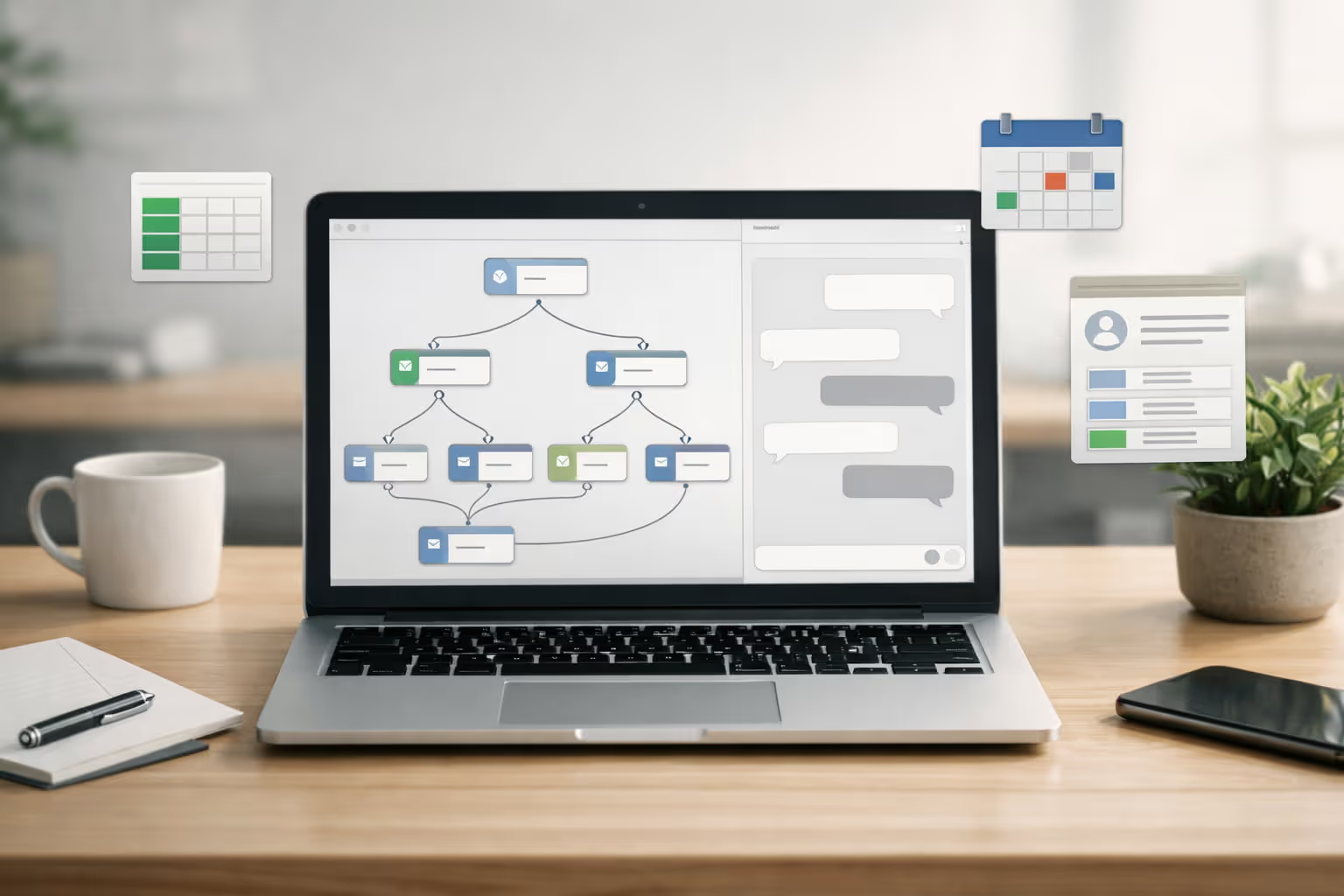
A no-code marketing bot is a conversational automation built through visual interfaces rather than programming. Instead of coding conditional logic and API integrations, marketers use drag-and-drop builders to design conversation flows, set triggers, and connect data sources.
These platforms provide several core capabilities:
- Visual flow builders that map conversation paths using connected nodes
- Pre-built templates for common use cases like lead qualification or appointment booking
- AI assistance for generating copy, understanding user intent, and suggesting responses
- Multi-channel deployment allowing the same bot logic to work across web chat, Facebook Messenger, WhatsApp, and other channels
The fundamental difference from traditional chatbots lies in accessibility. Marketing teams can directly create, test, and optimize bot experiences without development resources or technical knowledge.
Build, Deploy, and Scale an AI Chatbot Without Touching Code
Modern ai chatbot platforms allow any business to build powerful conversational experiences without writing code or touching code. Using a no code platform with a visual builder, teams can create custom bots that answer questions, automate workflows, and support lead generation across websites and different channels.
These tools combine a no code builder with multiple AI models, making it possible to deploy an ai agent that delivers accurate answers using your own data sources and knowledge base. Instead of managing complex logic, developers and non-technical users can focus on outcomes: faster setup, easier deploy, and measurable growth.
One Platform, All the Features Your Business Needs
The best platforms bring all the features together in one account:
- A user friendly interface with a drag-and-drop visual builder
- Support for multiple ai models to improve response quality
- Built-in automation tools to automate repetitive tasks
- Native integrations with tools like Google Sheets for reporting and workflows
With advanced ai models, the chatbot can handle answering questions, route conversations to the right support team, and escalate to human customer support when needed. This balance between automation and human assistance keeps customers happy while maintaining speed and security.
From Chat to Business Impact
A well-configured ai chatbot doesn’t just chat — it helps automate operations and drive lead generation. These bots can answer questions based on your documentation, qualify prospects in real time, and support ongoing projects without slowing down your team.
Whether you’re managing multiple websites, launching new features, or testing a free plan, an ai agent can operate at scale through live chat, delivering clear answers instantly. For teams working closely with developers, these platforms remove friction while still offering advanced features when deeper customization is required.
By centralizing conversations, automation tools, and analytics in one chatbot solution, businesses gain speed, clarity, and control — without complexity.
How No-Code Bots Are Transforming Marketing
No-code bots address several persistent marketing challenges simultaneously. Lead qualification, which traditionally requires manual review or complex scoring systems, becomes an interactive conversation that captures intent data in real-time.
A visitor expressing interest in enterprise features immediately triggers different pathways than someone exploring free trials.
Product recommendation flows adapt based on user responses, creating personalized shopping experiences that rival human sales associates. An e-commerce bot asking about style preferences, budget, and occasion can surface relevant products faster than traditional filtering interfaces.
Support automation extends beyond simple FAQ responses. Modern no-code bots handle multi-step troubleshooting, collect diagnostic information, and seamlessly escalate to human agents when needed—all while maintaining conversation context.
The conversion impact is measurable. Bots engaging visitors within 5 seconds see qualification rates 3-4x higher than static forms. Abandoned cart recovery sequences initiated through conversational channels recover 15-25% more revenue than email-only approaches.
Types of No-Code Chatbots Marketers Can Build
FAQ/Support Bots
These handle repetitive inquiries about pricing, features, shipping, or policies. Rather than maintaining static FAQ pages, support bots guide users to specific answers through conversational branching. Advanced versions pull answers from knowledge bases, updating automatically as documentation changes.
Lead Generation Bots
Purpose-built for capturing and qualifying prospects, these bots replace traditional forms with conversational experiences. They ask qualifying questions progressively, adapt based on responses, and route high-value leads directly to sales teams while nurturing others through automated sequences.
E-commerce Recommendation Bots
These function as digital shopping assistants, asking about preferences, use cases, and constraints before suggesting products. Integration with inventory systems ensures recommendations stay current, while purchase history data enables personalized upselling.
AI-Driven Conversational Bots
Leveraging natural language processing, these bots understand intent rather than matching keywords. Users can ask questions naturally, and the bot interprets meaning to provide relevant responses or trigger appropriate workflows.
Workflow/Automation Bots
These connect multiple systems to complete complex tasks. A recruitment bot might screen candidates, schedule interviews, send calendar invites, and update the ATS—all through a single conversation interface.
Multi-Channel Bots
Deploy once, run everywhere. These bots maintain consistent experiences across websites, mobile apps, social media platforms, and messaging apps. Conversation state persists as users switch channels, preventing repetitive interactions.
Key Features to Look For in a No-Code Marketing Bot Platform
Drag-and-drop builder functionality determines how quickly you can create and modify bots. Look for interfaces that visualize conversation flows clearly, support branching logic, and allow real-time preview of changes.
Template libraries accelerate deployment. Platforms offering industry-specific templates (SaaS onboarding, real estate showing scheduler, fitness consultation booking) provide starting points you can customize rather than building from scratch.
AI/NLP understanding separates basic rule-based bots from intelligent assistants. Evaluate whether the platform can recognize intent variations, handle typos, and understand context across multi-turn conversations.
CRM and email integrations ensure captured data flows into existing systems. Native integrations with HubSpot, Salesforce, or Mailchimp eliminate manual data entry and enable sophisticated nurture sequences.
Team collaboration tools matter for scaling bot operations. Role-based permissions, version control, and commenting features prevent conflicts when multiple team members manage bots.
Multichannel deployment capabilities should cover your current and future channels. Verify support for your website, relevant social platforms, and messaging apps your audience uses.
A/B testing capabilities enable optimization. Test different conversation flows, messages, and CTAs to improve qualification rates and conversions systematically.
Analytics and conversation insights reveal optimization opportunities. Look for platforms providing conversation transcripts, drop-off analysis, and intent recognition reports.
Compliance and data handling features ensure regulatory adherence. GDPR consent collection, data retention policies, and encryption standards protect both your business and customers.
Best No-Code Marketing Bot Tools
1. AI-Powered Conversational Bot Builders
These platforms emphasize natural language understanding over rigid decision trees. Users can type questions freely, and the bot interprets intent to provide appropriate responses.
The primary advantage lies in conversation flexibility. Rather than forcing users through predetermined paths, AI-powered bots handle unexpected questions, understand context from previous messages, and generate dynamic responses based on training data.
Intent recognition reduces the maintenance burden. Instead of mapping every possible phrase variation, you define intents (like "pricing question" or "technical support") and train the model with examples. The system then recognizes similar queries automatically.
2. Visual Drag-and-Drop Bot Builders
Built specifically for non-technical users, these platforms prioritize ease of use. Conversation flows resemble flowcharts, with boxes representing messages and lines showing connections.
Flow-based building makes logic transparent. You can trace exactly how conversations progress, identify bottlenecks, and test edge cases without debugging code. Most platforms include simulation modes to experience the bot from a user's perspective.
Templates cover common scenarios like appointment booking, lead qualification, and customer feedback collection. Starting with a template and customizing for your brand often takes less than an hour.
Publishing across channels happens through configuration, not coding. Connect your Facebook page, add a web widget snippet, or generate QR codes for physical locations—all from the same interface.
3. Multi-Channel Marketing Automation Bots
Omnichannel platforms recognize that customers interact across multiple touchpoints. A prospect might discover your bot through Instagram, continue the conversation on your website, and complete a purchase via WhatsApp.
These tools maintain unified customer profiles across channels. Conversation history, preferences, and context persist regardless of where interactions occur. Marketing teams gain complete visibility into the customer journey rather than fragmented channel-specific views.
Channel-specific optimizations ensure native experiences. WhatsApp bots can send product catalogs, Facebook Messenger bots can process payments, and web bots can trigger JavaScript events—all managed from a central platform.
4. Affordable & Lightweight No-Code Bot Tools
Not every business needs enterprise-grade bot platforms. Lightweight tools focus on specific use cases like FAQ automation or basic lead capture, offering essential features at accessible price points.
Simple FAQ bots can deflect 40-60% of repetitive support tickets. Even basic keyword matching, when well-configured, handles common questions about business hours, shipping policies, or pricing tiers.
Lead capture bots replace static forms with conversational experiences. Instead of presenting 10 fields simultaneously, they ask questions progressively, maintaining engagement and increasing completion rates.
Starter-level tools often include generous free tiers. Small businesses can validate bot effectiveness before committing to paid plans, making experimentation risk-free.
Use Cases: What No-Code Marketing Bots Can Automate
Website chat and onboarding guides new visitors through your value proposition. Instead of hoping users find relevant information, bots proactively engage, ask about their needs, and direct them to appropriate resources or demos.
Lead qualification flows determine sales-readiness through conversational discovery. Bots ask about company size, budget, timeline, and specific requirements, scoring leads based on responses and routing accordingly.
Product recommendations personalize shopping experiences at scale. Bots function as knowledgeable sales associates, asking about preferences, use cases, and constraints before suggesting suitable products from your catalog.
Booking and scheduling eliminates back-and-forth coordination. Bots check calendar availability, offer time slots, collect necessary information, and send confirmations—handling the entire booking process automatically.
Cart recovery re-engages abandoning customers through conversational channels. Rather than generic "you left items" emails, bots can ask about hesitations, offer assistance, or provide incentives based on cart value.
Customer feedback gathering improves response rates through conversational surveys. Bots make feedback collection feel natural, asking follow-up questions based on ratings and capturing qualitative insights alongside scores.
Promotions and quizzes create interactive marketing experiences. Product finder quizzes, personality assessments, or contest entries become engaging conversations that capture leads while providing value.
How to Build a No-Code Marketing Bot
1. Identify the goal/outcome Start with a specific, measurable objective. "Improve customer experience" is vague; "qualify 100 leads per week for sales outreach" provides clear success criteria. Define what constitutes success and how you'll measure it.
2. Choose channel + entry point Consider where your audience expects to interact. B2B software companies might prioritize website chat, while fashion brands focus on Instagram. Entry points—chat widgets, QR codes, link triggers—should align with user behavior patterns.
3. Draft your conversation outline Map the ideal conversation flow before building. Write out questions, anticipated responses, and branching logic. Consider edge cases: What if someone provides unexpected answers? When should the bot escalate to humans?
4. Build with templates or AI flow suggestions Most platforms offer starting points. Select a relevant template, then customize messaging, logic, and integrations. AI-assisted builders can suggest conversation paths based on your goals, accelerating the design process.
5. Connect to CRM or email marketing Configure integrations early to ensure data flows correctly. Map bot-collected fields to CRM properties, set up lead routing rules, and create triggered email campaigns for different conversation outcomes.
6. Test scenarios Run through every possible conversation path. Test with typos, unexpected responses, and edge cases. Verify integrations trigger correctly and data appears in connected systems. Include team members unfamiliar with the bot for unbiased testing.
7. Launch + monitor performance Start with soft launches to limited audiences. Monitor conversation transcripts, identify confusion points, and refine responses based on real interactions. Gradual rollouts allow optimization before full-scale deployment.
Best Practices for High-Performing Marketing Bots
Keep flows short and focused. Users engage with bots for quick solutions, not lengthy conversations. Aim for 3-5 questions maximum before providing value or requesting contact information.
Use quick replies/buttons whenever possible. Typing creates friction; clicking pre-defined options maintains momentum. Reserve free-text input for necessary information like email addresses or specific requirements.
Personalize responses using collected information. Reference previous answers, use provided names, and acknowledge context. "Thanks for your interest in enterprise features, Sarah" feels more engaging than generic responses.
Include clear CTAs at decision points. Every conversation should progress toward a specific action: booking a demo, downloading content, or speaking with sales. Make next steps obvious and easy to complete.
Offer human handoff options throughout conversations. Users should never feel trapped in automation. Provide escalation paths when bots can't resolve issues or when users explicitly request human assistance.
Review conversation drop-offs regularly. Identify where users abandon conversations and investigate why. Confusing questions, technical errors, or slow responses might cause exits you can address.
Common Pitfalls to Avoid
Over-automating complex scenarios frustrates users. Not every interaction suits bot automation. Sensitive issues, complex troubleshooting, and high-value sales conversations often require human touch.
Neglecting AI training leads to poor understanding. If using NLP-based bots, continuously train models with real conversation data. Add new intent examples, correct misclassifications, and expand training sets regularly.
Insufficient testing causes launch failures. Test beyond happy paths. Verify error handling, timeout behaviors, and integration failures. Load test high-traffic scenarios to ensure platform stability.
Ignoring accessibility/mobile experiences excludes users. Ensure bots work with screen readers, support keyboard navigation, and display correctly on small screens. Mobile-first design is essential when significant traffic comes from smartphones.
Complex flows with no fallback options trap users. Always provide escape routes: transfer to human agents, leave contact information, or exit gracefully. Dead-ends frustrate users and damage brand perception.
Poor copy and unclear choices confuse visitors. Write conversationally but clearly. Avoid jargon, explain technical terms, and ensure response options are mutually exclusive and collectively exhaustive.
How to Measure Success With No-Code Bots
Engagement rate measures initial bot effectiveness. Calculate the percentage of visitors who interact beyond the initial greeting. Low engagement suggests poor timing, irrelevant messaging, or visibility issues.
Qualification rate indicates lead generation quality. Track what percentage of engaged users provide qualifying information. Compare against traditional form conversion rates to demonstrate bot value.
Conversion rate connects bot interactions to business outcomes. Whether measuring demo bookings, purchases, or support ticket resolutions, link bot conversations to desired actions.
Average response time impacts user satisfaction. While bots respond instantly, measure total conversation time and compare against alternative channels. Efficient bots should resolve queries faster than email or phone support.
Lead capture volume quantifies pipeline contribution. Track monthly leads generated, but also monitor lead quality. High volume with low sales acceptance rates indicates qualification criteria need adjustment.
Customer satisfaction scores validate experience quality. Post-conversation surveys or CSAT ratings reveal whether bots meet user expectations. Compare scores against human agent benchmarks.
Cost savings justify bot investments. Calculate deflected support tickets, reduced human chat volume, and sales team time saved through pre-qualification. Include both hard costs and opportunity costs in ROI calculations.
Integrating No-Code Bots Into Your Marketing Stack
CRM integration (HubSpot, Salesforce) ensures lead data flows seamlessly. Configure field mappings, set up lead scoring rules based on bot interactions, and trigger workflow automations for different lead types.
Email tools (Klaviyo, Mailchimp) enable multi-touch nurturing. Bot conversations can trigger email sequences, update subscriber segments, and personalize future communications based on expressed preferences.
E-commerce platforms (Shopify, WooCommerce) connect bots to product catalogs and order systems. Real-time inventory checks, personalized recommendations, and order status updates happen without manual intervention.
Support tools (Zendesk, Intercom) maintain conversation continuity. Bot interactions create tickets, update customer records, and provide context for human agents taking over conversations.
Analytics tools complement native bot reporting. Send events to Google Analytics, create custom dashboards in Tableau, or build attribution models including bot touchpoints. Unified analytics reveal bot impact on overall marketing performance.
FAQs: No-Code Marketing Bots
Can no-code bots handle AI conversations?
Yes, many platforms now include AI/NLP to understand intent and respond naturally. Modern no-code tools integrate GPT models, dialogue management systems, and sentiment analysis without requiring technical configuration.
You train the AI through examples rather than coding, making sophisticated conversational AI accessible to marketing teams.
Which no-code bot builder is the easiest to use?
Drag-and-drop platforms with template libraries tend to be most beginner-friendly. Look for tools offering visual flow builders, extensive template collections, and built-in testing environments. Platforms that provide interactive tutorials and responsive support help teams get started quickly without technical expertise.
Do no-code bots integrate with CRM and email tools?
Most leading platforms integrate directly with CRM systems, email platforms, and analytics dashboards. Native integrations with HubSpot, Salesforce, Marketo, and similar tools are standard. Even platforms without pre-built integrations often support webhooks or Zapier connections for custom data flows.
Are no-code bots secure?
Yes, most tools offer data protection and privacy features, but proper configuration is essential. Look for platforms with SOC 2 compliance, GDPR support, and encryption for data in transit and at rest. Configure data retention policies, implement user consent flows, and regularly audit bot permissions to maintain security.
Can bots replace human support?
No. Bots enhance automation but should complement human agents for complex or sensitive cases. Effective bot strategies handle routine queries and initial triage while escalating nuanced situations to humans. The goal is augmentation—freeing human agents to focus on high-value, empathy-requiring interactions while bots handle repetitive tasks.