
AI Social Media Bot

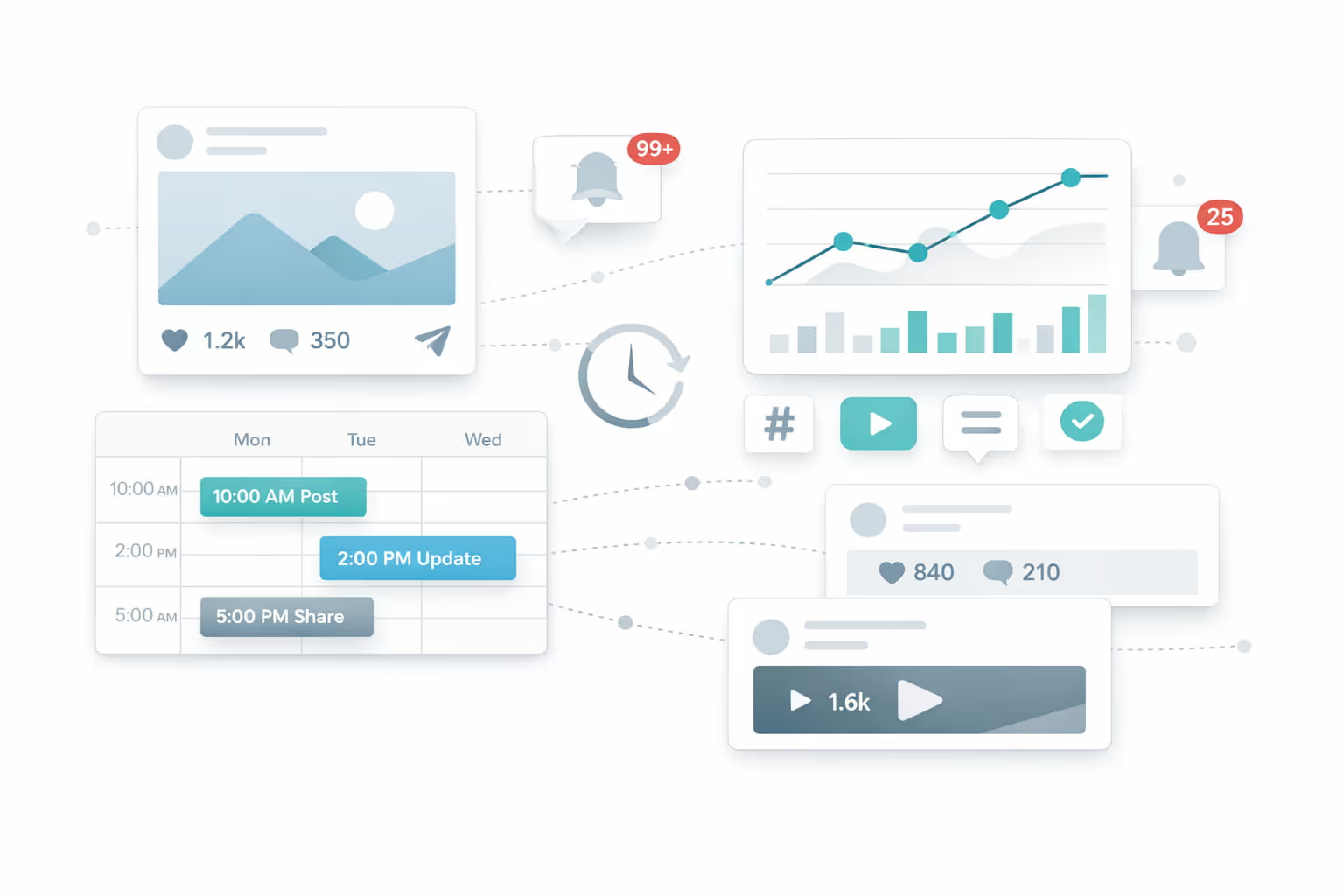
What is an AI Social Media Bot?
AI social media bots are automated programs that engage with social media platforms, operating either partially or fully autonomously. These software applications are designed to mimic human posting behavior, creating an illusion of organic user activity.
Research indicates that approximately 20% of chatter on social media about global events comes from bots, with the remaining 80% from humans.
Unlike human users who post sporadically based on availability and interest, social media bots can execute tasks continuously—posting content, liking updates, following accounts, and engaging with posts at speeds no human could match.
As of 2024, automated bots now make up more than half of global internet traffic, marking a fundamental shift in how platforms operate.
The sophistication of these bots varies considerably. Basic bots perform simple, repetitive tasks like automated follows or scheduled posts. Advanced AI-powered bots can analyze trending topics, generate contextually relevant responses, and even adapt their behavior based on engagement patterns.
What are Social Media Bots Used For?
When deployed legitimately, social media bots provide utility-focused services that enhance user experience without deception. Some social media bots provide useful services, such as weather updates and sports scores, and these 'good' social media bots are clearly identified as such.
Legitimate use cases include:
Stock market and financial updates: Bots can automatically post real-time stock index performance, providing traders and investors with immediate market data without manual intervention.
News aggregation: Media organizations deploy bots to share breaking news headlines across platforms, ensuring rapid dissemination of verified information to followers.
Weather forecasting: Automated weather update bots deliver localized forecasts, severe weather alerts, and daily conditions to specific geographic communities.
Sports scores and statistics: Sports bots provide instant game scores, player statistics, and tournament updates, serving fans who want immediate access to results.
Traffic and transportation updates: Transit authorities and traffic monitoring services use bots to alert users about road conditions, delays, and alternative routes in real-time.
These legitimate bots reduce the manual labor required to maintain active social media presence while delivering consistent value to users.
The key distinction: they openly identify as automated services rather than masquerading as human accounts.
What are the Common Misuses of AI Social Media Bots?
When used maliciously, social media bots become tools for manipulation and deception. The global average of bad bot traffic reached 32% in 2024, with some countries experiencing levels as high as 71%.
Artificial amplification of popularity: Bot networks create fake follower counts and engagement metrics to manufacture the appearance of influence. An account with millions of bot-generated followers gains perceived credibility, making real users more likely to follow and trust the account.
This fake social proof can be purchased on black markets, with more convincing bots commanding higher prices.
Election interference and political manipulation: Social media bots have been deployed to influence electoral outcomes by flooding platforms with partisan content and amplifying specific narratives.
Research on the 2016 U.S. presidential election revealed significant bot activity attempting to shape political discourse. Analysis of a 2024 political incident found that 45% of profiles pushing a false narrative were bots, potentially reaching 595 million people.
Financial market manipulation: Bot networks spread manufactured positive or negative information about corporations in coordinated attacks designed to move stock prices. By flooding social platforms with fake news about a company's performance, bad actors can profit from artificial price movements before the truth emerges.
Amplifying phishing and social engineering attacks: Fake followers and artificial engagement help convince victims that scammers are legitimate entities. When a fraudulent account has thousands of followers and active engagement, it appears more trustworthy, making users more susceptible to phishing attempts and financial fraud.
Misinformation distribution: Bots can rapidly spread false information by posting and resharing content repeatedly, creating the illusion of widespread acceptance. This tactic has been used to undermine trust in legitimate news sources and sow confusion on public health, political, and social issues.
What are the Differences Between a Social Media Bot and Chatbots?
While both use automation, social media bots and chatbots serve fundamentally different purposes and operate with distinct capabilities.
Chatbots are designed for conversational interaction. They employ if/then logic and natural language processing to hold dialogues with users, responding dynamically to input.
A customer service chatbot on an e-commerce site can answer product questions, process returns, and guide users through troubleshooting—all through active conversation. The chatbot interprets what users type and formulates contextually appropriate responses.
Social media bots lack this conversational capability. They don't need to "understand" language or engage in dialogue because their function is action-based rather than conversation-based.
Many social media bots never use language at all—they simply execute mechanical tasks like delivering follows, likes, retweets, or scheduled posts. When they do post content, it's typically pre-programmed or algorithmically generated rather than responsive to specific user queries.
Social media bots are often designed to mimic human users but do not need to know how to converse. Their effectiveness comes from scale and persistence rather than interactive intelligence.
A single operator can control hundreds or thousands of social media bots simultaneously, whereas chatbots typically require dedicated oversight and ongoing management.
The distinction matters for detection and regulation. Conversational inconsistencies can expose chatbot limitations, but social media bots can operate indefinitely without ever engaging in dialogue that would reveal their automated nature.
Conclusion: Finding the Right AI Social Media Bot
Your approach to AI social media bots should align directly with your objectives and ethical standards. Legitimate automated accounts that provide weather updates, news aggregation, or customer service deliver clear value—provided they operate transparently and don't misrepresent their automated nature.
The decision framework is straightforward: if your bot provides utility in an above-board manner, clearly identifies itself as automated, and doesn't artificially inflate metrics or manipulate perception, it can save time while serving your audience effectively.
However, purchasing fake followers, deploying bots to manufacture engagement, or using automation to spread misleading information will damage long-term credibility.
Data security research shows that 37% of internet traffic in 2024 consisted of malicious bots—a clear indication that platforms and users are increasingly vigilant about artificial manipulation.
Authentic social media growth comes from genuine value delivery, not manufactured metrics. The short-term appearance of popularity generated by bot networks inevitably collapses when platforms improve detection methods or when audiences recognize the artificial nature of engagement.
Focus on building real connections with actual users, and if you deploy automation, ensure it enhances rather than replaces authentic human interaction.