
Automated Content for Manufacturing Businesses from Blaze.ai

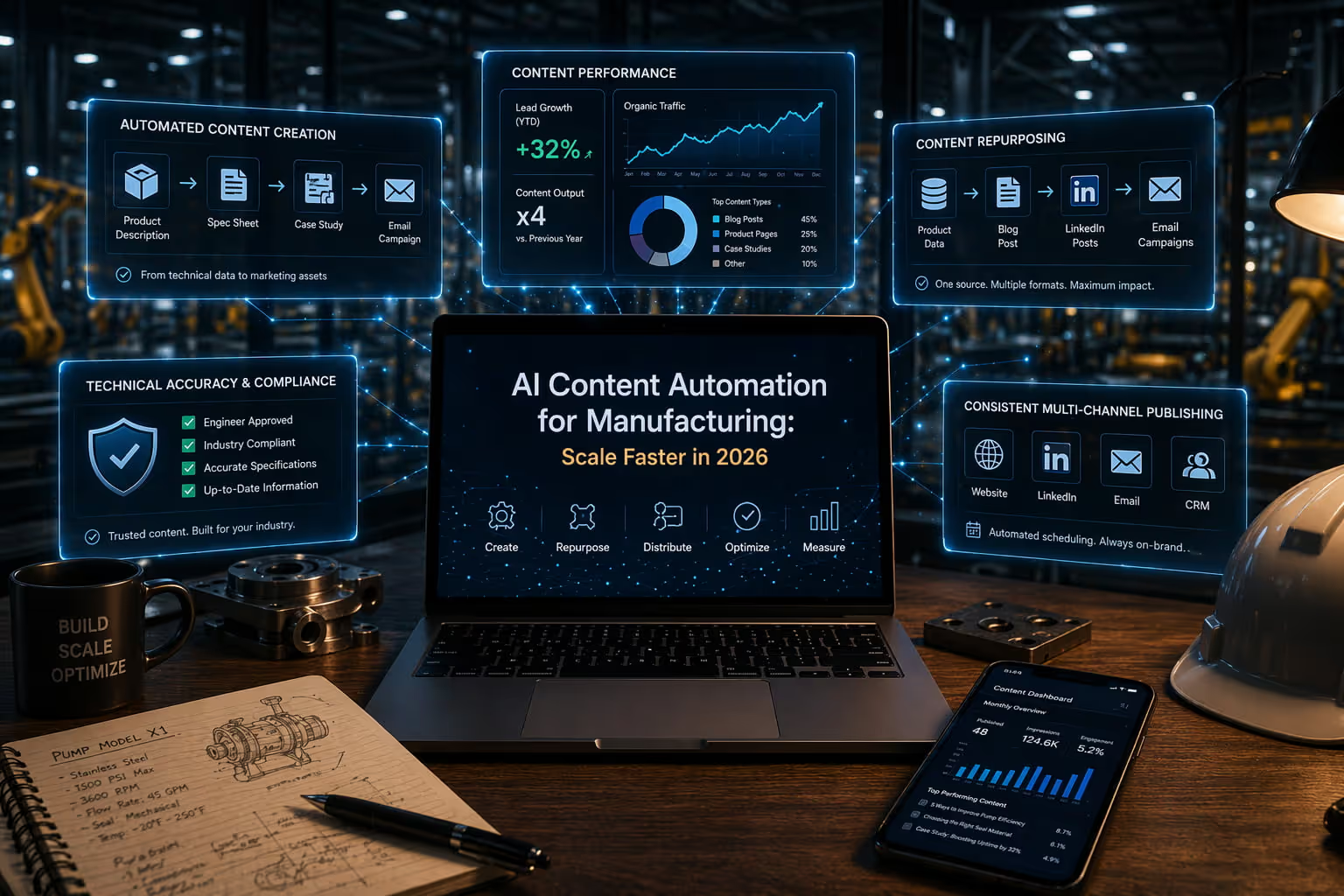
Automated Content for Manufacturing Businesses: How to Scale Marketing and Communication with AI
Manufacturing companies build complex, high-value products, but when it comes to marketing those products, many are stuck operating like it's 2010. Blog posts go unpublished for months.
Product pages stay outdated long after a new model ships. Sales reps pull together one-pagers manually because no one has time to create proper collateral. Meanwhile, the competition is showing up consistently across search, email, and social.
The fix isn't hiring a bigger marketing team. It's smarter systems, specifically, automated content for manufacturing businesses powered by AI. Tools like Blaze are making it possible for industrial companies to produce, distribute, and scale content at a pace that was previously unimaginable without an agency retainer.
This article breaks down how to make that shift, why it matters, and what streamlining manufacturing workflows using AI looks like in practice.
Why Content Is a Bottleneck for Manufacturing Businesses
Before exploring the solution, it's worth being honest about the problem. Manufacturing companies face a specific and compounding set of content challenges that most marketing guides don't account for.
Limited Internal Marketing Resources
Most manufacturers weren't built around content. They were built around production, engineering, and operations, and for good reason. But that means marketing is often either an afterthought or a hat worn by someone whose primary job is something else entirely.
It's common to find engineers writing product descriptions, sales managers drafting newsletters between calls, and leadership approving blog drafts during their lunch break.
These are capable people, but B2B manufacturing marketing isn't their core function, and it shows in the consistency and volume of content output. When operational priorities compete with content creation (which is always), content loses.
Complex Products Require Detailed Content
Industrial products are rarely simple. A single SKU might require documentation covering technical specifications, material tolerances, compliance certifications, application-specific use cases, and industry-specific messaging for three different buyer personas.
That level of depth takes time and expertise to produce, which means industrial content creation slows to a crawl even when the intent to publish is there.
The challenge isn't just writing. It's translating deeply technical product knowledge into content that is both accurate and accessible for the buyers, procurement managers, and specifiers on the other end.
Inconsistent Content Output
The downstream effect of under-resourced, over-complicated content creation is inconsistency. Blogs go up whenever someone has a free Friday. Product pages reflect specs from two product generations ago.
Email newsletters are sent quarterly, if the quarter has been quiet enough. Social media either goes dormant or gets handled reactively.
This inconsistency doesn't just hurt SEO rankings. It signals instability to potential buyers doing research before a purchase that may be worth hundreds of thousands of dollars. In B2B manufacturing, trust is currency, and erratic content erodes it.
What "Automated Content for Manufacturing Businesses" Really Means
The phrase can sound abstract, so let's be specific. Automated content for manufacturing businesses isn't about replacing human expertise, it's about removing the friction that keeps that expertise from reaching buyers at scale.
Platforms like Blaze sit at the intersection of AI content for manufacturers and practical workflow automation, making the following possible.
AI-Driven Content Creation
With the right inputs, AI can generate high-quality first drafts across every content format that manufacturers need:
- Product descriptions that accurately capture specifications while speaking to buyer needs
- Case studies structured around problem, solution, and measurable outcome
- Technical blog posts that establish authority on industry topics and drive organic search traffic
- Email campaigns tailored to different segments of a manufacturer's audience, distributors, OEM partners, end buyers
The key is that AI handles the blank-page problem. Subject matter experts then refine and approve, rather than being the ones staring at a cursor.
Content Repurposing at Scale
One of the highest-leverage applications of automate product content strategies is repurposing. A single detailed product write-up can become:
- A feature breakdown for the product page
- A technical blog post exploring a specific use case
- A series of LinkedIn posts highlighting key specifications
- An email to distributors introducing the product
- A one-page sales leave-behind for field reps
Streamlining manufacturing workflows using AI means the content doesn't live in one format, it flows across channels without requiring a full production cycle each time.
Automated Distribution
Creating content is only half the equation. Blaze also helps manufacturers schedule and distribute that content across channels, ensuring consistent publishing cadences without relying on someone remembering to hit "post."
Multi-channel campaigns go out on time. Messaging stays aligned. The brand shows up where buyers are looking, reliably.
Key Content Types Manufacturers Can Automate
Let's get specific about what manufacturing marketing automation actually covers in practice.
Product & Catalog Content
Product content is often the most neglected and the most commercially important. AI can help manufacturers maintain current, detailed, and buyer-friendly content for:
- Product pages with specifications, applications, and differentiated positioning
- Spec sheets formatted for download and sales distribution
- Feature breakdowns that translate technical advantages into buyer-relevant benefits
When a new product launches or a line gets updated, automated content workflows mean the go-to-market content is ready faster, not weeks behind the release.
Sales Enablement Content
Sales reps at manufacturing companies frequently spend time creating or adapting materials they shouldn't have to touch. Manufacturing marketing automation changes this by keeping a library of ready-to-deploy content:
- Case studies that give reps proof points for specific industries or applications
- One-pagers that present the product or solution concisely for prospect meetings
- Proposal templates that reduce the time between discovery and formal submission
Better-equipped reps close faster. That's not a content outcome, it's a revenue outcome.
Marketing Content
This is the category most people think of first, and for good reason. Consistent B2B manufacturing marketing requires a steady flow of:
- Blog posts that target industrial search queries and drive inbound traffic
- Social media updates that maintain visibility and credibility across LinkedIn and beyond
- Email newsletters that nurture distributor relationships and keep the brand top of mind with buyers who operate on long purchasing cycles
With Blaze, manufacturers can maintain this output without adding headcount.
Internal & Operational Content
This category is underestimated. Content automation isn't just external-facing. AI can help generate:
- Training materials for onboarding new production or sales staff
- Standard operating procedures (SOPs) that document processes clearly and consistently
- Internal updates that keep teams aligned during product launches, policy changes, or operational shifts
Reducing the manual effort required to produce internal documentation frees up the same subject matter experts who contribute to external content, creating a compounding efficiency.
How Automated Content Improves Manufacturing Business Performance
None of this matters if it doesn't move the needle on real business outcomes. Here's how AI content for manufacturers connects to performance metrics that leadership actually cares about.
Faster Time-to-Market for Products
When automated content workflows are in place, new product launches don't wait on a content bottleneck. Product pages, spec sheets, announcement emails, and introductory blog posts can be produced in parallel with the product's final development phase, so the moment a product is ready to sell, the content is ready to support it.
For manufacturers in competitive categories, being first to communicate effectively about a new offering matters.
Increased Lead Generation
Consistent, SEO-optimized blog content compounds over time. Every well-targeted article is a permanent asset that drives organic traffic to a manufacturer's website.
Industrial content creation at scale means more entry points for buyers who are searching for products, partners, or solutions, and more opportunities to convert that traffic into qualified leads.
Educational resources, technical guides, application explainers, comparison content, also play a role in nurturing buyers through long consideration cycles typical in industrial purchasing.
Stronger Sales Support
Streamlining manufacturing workflows using AI doesn't just help marketing, it directly supports the sales team. When reps have a continuously updated library of case studies, one-pagers, and proposal templates, they spend less time creating and more time selling. The content is better, more consistent, and delivered faster.
Improved Brand Consistency
One of the quieter benefits of manufacturing marketing automation is unified brand voice. When content is generated through a platform like Blaze, with brand guidelines, tone preferences, and messaging pillars built in, every piece of content, across every channel, sounds like it came from the same company.
For industrial buyers evaluating vendors over a 6–12 month period, that consistency builds confidence.
A Simple Framework to Get Started with Content Automation
Getting started doesn't require a complete transformation. It requires a structured starting point.
Step 1: Centralize Product & Company Information
AI generates better content when it's working from accurate, organized inputs. Before automating anything, gather your product specifications, company differentiators, customer success stories, and brand guidelines into a centralized reference. This becomes the foundation that powers everything downstream.
Step 2: Build Content Templates
Define the formats you need most. A product description template. A case study structure. A blog post framework. Templates create consistency and give AI systems the scaffolding they need to produce on-brand, structurally sound content from the start.
Step 3: Use AI to Generate Initial Drafts
With information centralized and templates defined, Blaze can generate initial drafts across your priority content types. This is where the time savings become immediately visible, drafts that would take a half-day to produce from scratch are ready in minutes, built for refinement rather than creation.
Step 4: Review, Refine, and Publish
AI-generated drafts are starting points, not finished products. Subject matter experts, engineers, sales leads, product managers, review for technical accuracy and add the nuance that comes from real operational knowledge.
What changes is the proportion of time spent creating versus editing. The final product is human-approved and brand-aligned.
Step 5: Repurpose and Scale
Once a piece of content exists, the workflow doesn't stop. A product launch blog becomes a LinkedIn post series. An in-depth case study becomes an email campaign. A technical explainer becomes a sales one-pager. This is automate product content thinking in action, one asset, multiplied.
The ROI of Automated Content for Manufacturing Businesses
The case for investment needs to be measurable. Here's what manufacturers typically see when content automation is implemented well.
Increased Content Output
Companies that implement AI-driven content workflows routinely see 3–5x more content produced without a proportional increase in resources. For a manufacturer that publishes one blog post per month, that might mean consistent weekly publication, which compounds significantly in organic search over 12–18 months.
Higher Lead Volume
More content, better distributed, means more touchpoints with potential buyers. B2B manufacturing marketing that runs consistently across search, email, and social generates a wider top-of-funnel, and more opportunities for nurture content to move prospects toward a conversation.
Reduced Marketing Costs
Replacing manual content production with AI-assisted workflows reduces both labor costs and reliance on agencies for content execution. Manufacturers can redirect budget toward distribution, paid amplification, or sales resources, rather than the production of content itself.
Faster Sales Cycles
When buyers encounter a manufacturer consistently across channels, in search results, in their inbox, on LinkedIn, trust builds faster. Combined with better sales collateral available at each stage of the buying process, the result is a more confident buyer who needs fewer touchpoints before committing.
Final Thoughts: Content as a Growth Engine for Manufacturers
Manufacturing companies have always competed on product quality, reliability, and technical depth. Those advantages still matter, but they're only visible if buyers can find you, trust you, and understand what you offer before they ever pick up the phone.
Streamlining manufacturing workflows using AI is how manufacturers close the gap between the quality of their products and the quality of their presence in the market. Automated content for manufacturing businesses isn't a luxury for companies with large marketing teams.
It's the infrastructure that makes it possible for lean, operationally focused organizations to show up consistently, communicate clearly, and grow without adding overhead.
Blaze is built for exactly this, helping manufacturers produce more content, across more channels, with less effort. Whether you're starting with product pages or scaling a full multi-channel content program, the tools are there. The competitive advantage goes to the companies willing to use them.
Ready to see what content automation looks like for your manufacturing business? Explore what Blaze can do at blaze.ai.